

Tile Flooring Installation in Fort Worth, Texas
WHAT WE DO
Industry standards call for floors under large-format tile, meaning any edge 15 inches or longer, to vary no more than 1/8 inch over 10 feet and 1/16 inch over 24 inches. JG Painting 88 checks those numbers with a 10-foot straightedge before setting a single tile. Our tile flooring installation in Fort Worth, Texas includes porcelain, ceramic, natural stone, and wood-look plank, along with leveling, crack isolation membranes, thinset, grout, and sealing for floors that sit flat and stay put.
WHERE WE INSTALL
Tile Floors Built for Slabs on Shifting Clay
Most homes across Fort Worth, Texas, Irving, Texas, and nearby communities sit on concrete slabs poured over expansive clay that swells when wet and shrinks during drought. That seasonal movement can open hairline cracks in the slab and telegraph them right through rigid tile above. Kitchens, entryways, living areas, bathrooms, and mudrooms in ranch homes and newer two-story builds all benefit from tile, especially when cool porcelain underfoot helps during long summers. Proper membranes and movement joints keep those floors intact as the ground shifts.
Tile Flooring We Install
Every tile type has its own strengths, weight, and setting requirements, and these are the floor materials we install most often, along with the substrate work that keeps each one flat and properly bonded.
01
Porcelain Tile Floors
Dense and fired at high temperatures, porcelain absorbs very little water and resists stains and scratches. It suits kitchens, entries, and baths, and through-body versions hide chips because color runs all the way through the tile rather than sitting only on top.
02
Ceramic Tile Floors
Lighter and easier to cut, glazed ceramic offers a huge range of colors and patterns at a lower material price. It performs well in bathrooms, laundry rooms, and bedrooms with moderate foot traffic, and its glazed face wipes down easily after spills.
03
Natural Stone Floors
Travertine, marble, and slate bring one-of-a-kind veining and texture to a room. Stone needs a stiffer substrate, careful lippage control, and penetrating sealer, since many varieties are porous and can etch or stain from acidic spills like citrus or wine.
04
Large Format Tile
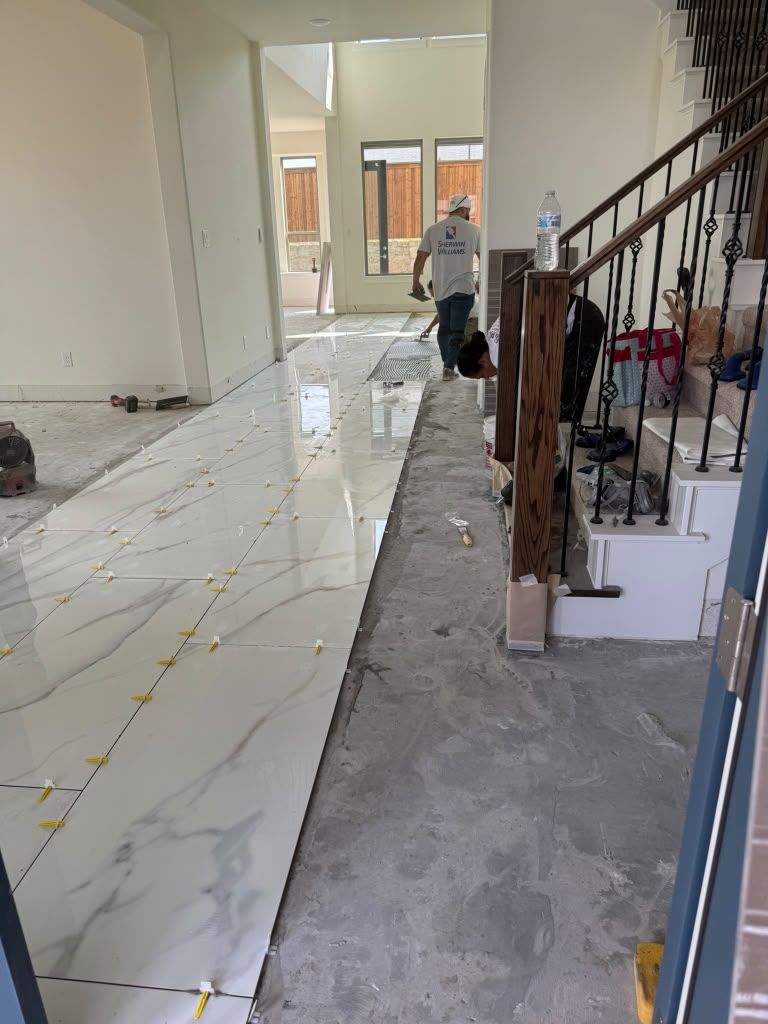
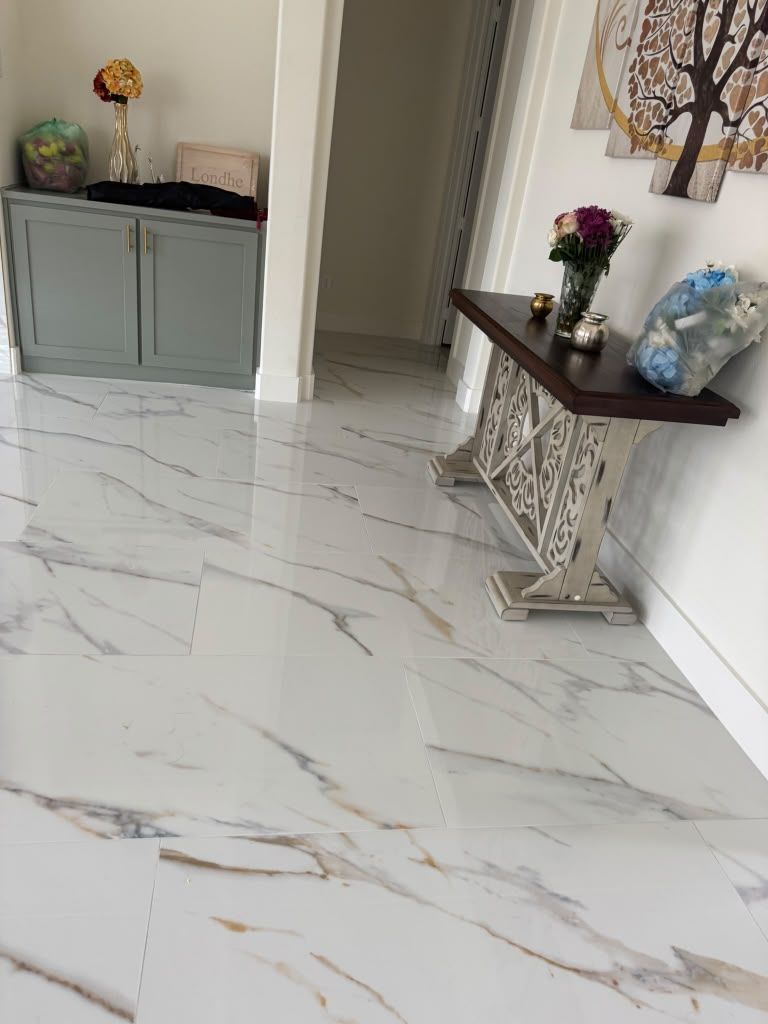
Pieces measuring 24 by 48 inches or larger create a sleek look with fewer grout lines. Their size demands flatter floors, back-buttering, leveling clip systems, and medium-bed mortar to achieve full coverage and prevent hollow spots or edge lippage.
05
Wood-Look Tile Planks
Porcelain planks mimic oak or hickory while shrugging off water, pets, and heat. Because long planks can bow slightly from the kiln, we use offsets of one-third or less instead of a 50 percent stagger to keep edges even.
06
Subfloor Prep and Leveling
Grinding high spots, filling dips with patching compound, and pouring self-leveling underlayment create the flat base tile requires. Wood subfloors get checked for deflection and fastened tight, because a bouncy floor cracks grout and tile no matter how carefully it is set.
Our Tile Flooring Installation Process
From the first measurement to the final coat of sealer, each stage of our process builds on the last, so the finished floor looks clean on day one and stays solid for years.
01
Measure and Layout Planning
Accurate room dimensions tell us how much material to order with waste for cuts. We snap reference lines, find the visual center, and plan so narrow slivers stay hidden under cabinets or along walls instead of landing at doorways.
02
Old Floor Removal
Carpet, vinyl, or cracked tile comes up down to the slab or subfloor, and leftover adhesive gets scraped or ground away. Dust containment and covered openings protect the rest of the house while this messier stage moves quickly.
03
Surface Leveling
Using a straightedge and rotary laser, we locate humps and low areas, then grind or fill until the floor meets the flatness tolerance for the tile size chosen. Skipping this is the leading cause of lippage and cracked tiles.
04
Membrane and Thinset
Crack isolation or uncoupling membranes absorb small slab movement so it does not travel into the tile. Then the correct thinset is mixed to the manufacturer's ratio and troweled with a notch sized for full coverage beneath every piece.
05
Setting and Spacing
Each tile is pressed into fresh mortar, checked for level against its neighbors, and spaced consistently for straight grout joints. Movement joints are left at perimeters and large fields, as industry guidelines call for, to let the floor expand without tenting.
06
Grouting and Sealing
After the mortar cures, joints are packed with grout, tooled to a consistent depth, and sponged free of haze. Cementitious grout and porous stone get a penetrating sealer, while flexible caulk fills perimeter and change-of-plane joints instead of rigid grout.
WHO WE ARE
Flat Floors Begin Below the Tile
Our installers know that a great tile floor is decided before the first piece is set. Slabs get ground, patched, and leveled, cracks get bridged with isolation membrane, and layouts are dry-fit so cuts land evenly at doorways. With 10+ years in the trade, we respect cure times instead of rushing grout. Crews are available daily from 6:00 AM to 8:00 PM, keeping dust controlled along the way. Tell us about your floor through our online quote form.
Why Choose JGPAINTING88
Quality, Experience & Service You Can Trust
01
Painting Services in Fort Worth
We offer interior, exterior, and cabinet painting for customers in Fort Worth, Irving, and nearby communities. We also provide wood staining and drywall repair to help refresh your space.
02
Flooring & Tile Installation
We install tile, laminate, and luxury vinyl plank (LVP) flooring, along with bathroom tile and kitchen backsplashes. We offer multiple flooring options to suit different rooms and project needs.
03
Cabinet Installation & Framing
We install and paint cabinets, giving you options for updating your kitchen or bathroom. We also provide framing and demolition services for projects that require changes beyond paint and flooring.
04
Daily Availability & Emergency Calls
We’re available Monday through Sunday from 6:00 AM to 8:00 PM and accept emergency calls 24/7. Our roof repair services include patching and leak repairs to address urgent roofing problems.
FAQs - Frequently Asked Questions
How long does it take to install tile flooring?
A typical room takes about 2 to 4 days, including surface prep, setting, and grouting. Larger areas, self-leveling pours, or natural stone add time, since mortar and leveling compounds need to cure before the next step can begin.
Can tile be installed directly over concrete?
Yes, as long as the slab is clean, flat, and free of sealers or adhesives that block bonding. Existing cracks should be covered with a crack isolation membrane so normal slab movement does not split the tile above.
What is the difference between porcelain and ceramic tile?
Porcelain is denser and absorbs 0.5 percent water or less, making it tougher and better for wet or high-traffic areas. Ceramic is softer, lighter, and easier to cut, which suits walls, backsplashes, and lower-traffic floors like bedrooms or powder rooms.
How long before you can walk on new tile?
Light foot traffic is usually fine after about 24 hours, once the thinset sets. For Fort Worth, Texas projects, JG Painting 88 asks homeowners to wait 72 hours before moving heavy furniture back, a habit our 10+ years installing floors has proven worthwhile.
Why does tile crack after installation?
Most cracking comes from substrate problems such as slab movement, flexing wood subfloors, or hollow spots with too little mortar. Missing movement joints also cause trouble, because tile pressed tight against walls has no room to expand with temperature changes.
Do you need to seal tile grout?
Cement-based grout is porous and benefits from a penetrating sealer once it cures. Epoxy grout and most premixed urethane grouts do not need sealing at all. Glazed porcelain and ceramic faces generally need no sealer, though natural stone usually does.
What size tile is best for a small room?
Larger tiles often make small rooms feel bigger because fewer grout lines break up the floor. Medium formats like 12 by 24 inches are a popular balance, and JG Painting 88 helps Fort Worth, Texas homeowners compare layouts using real samples.
Should tile go under kitchen cabinets?
Installing tile under cabinets is not required, but running it beneath an island or appliances keeps floor heights even. Dishwashers and ranges need clearance, so tiling under those spaces prevents appliances from getting trapped by a raised floor.
Floors That Stay Cool, Clean, And Built To Last
Tile earns its place in a home slowly, through years of muddy boots, dropped pans, and summer afternoons when a cool floor feels like relief. The difference between a floor that lasts and one that cracks usually comes down to the flatness, membrane, and mortar coverage hidden beneath the surface. JG Painting 88 installs porcelain, ceramic, and stone floors in Fort Worth, Texas with that groundwork done right, then finishes with tight grout lines and careful sealing. Choose a style that suits your rooms without feeling rushed. When you are ready to talk details, reach out through our contact page and tell us about your space.